
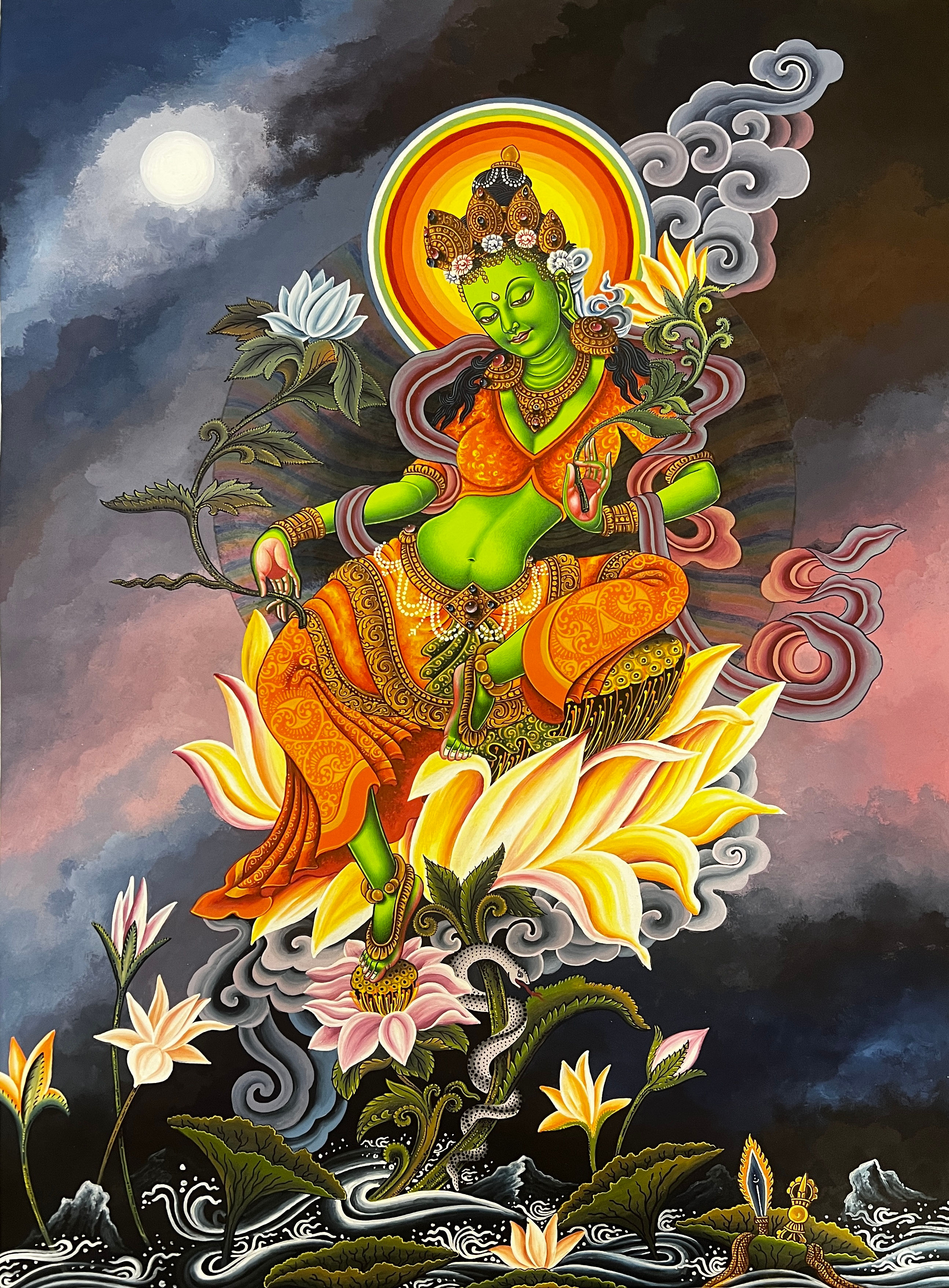
A Newari Green Tara Thangka is a traditional Tibetan Buddhist painting that depicts the goddess Green Tara, who is considered to be a female bodhisattva associated with compassion and protection. This particular type of Thangka is known as "Newari" because it is in the style of the Newari people of Nepal.
In the painting, Green Tara is depicted as a beautiful, young woman dressed in elaborate clothing and adorned with jewelry. She is seated on a lotus flower and is often shown holding a lotus in her left hand and making a gesture of protection with her right hand.
The use of the color green in this Thangka represents the goddess's association with growth, new beginnings, and life-sustaining energy. It is said that when one meditates on the image of Green Tara, she offers protection, peace, and guidance on the path towards enlightenment.
Newari Green Tara Thangkas are typically made using traditional materials such as silk, gold, and pigment, and are considered to be sacred objects of spiritual significance. They are often displayed in homes, temples, and meditation rooms as a source of inspiration and protection.
size=45*60 cm
